
Part 3: We Never Go Out of Style (The Best Portrayals)
Happy New Year! The emotions of 2024 ending distracted me, but I’m back with the final installment in my on-screen Anne depictions ranking trilogy! This time, I’ll tell you all about my four favorite Anne portrayals. I don’t imagine that my all-time favorite portrayal will be a surprise, but the other three and their placements may shock you…
#4: Genevieve Bujold in Anne of the Thousand Days (1969)
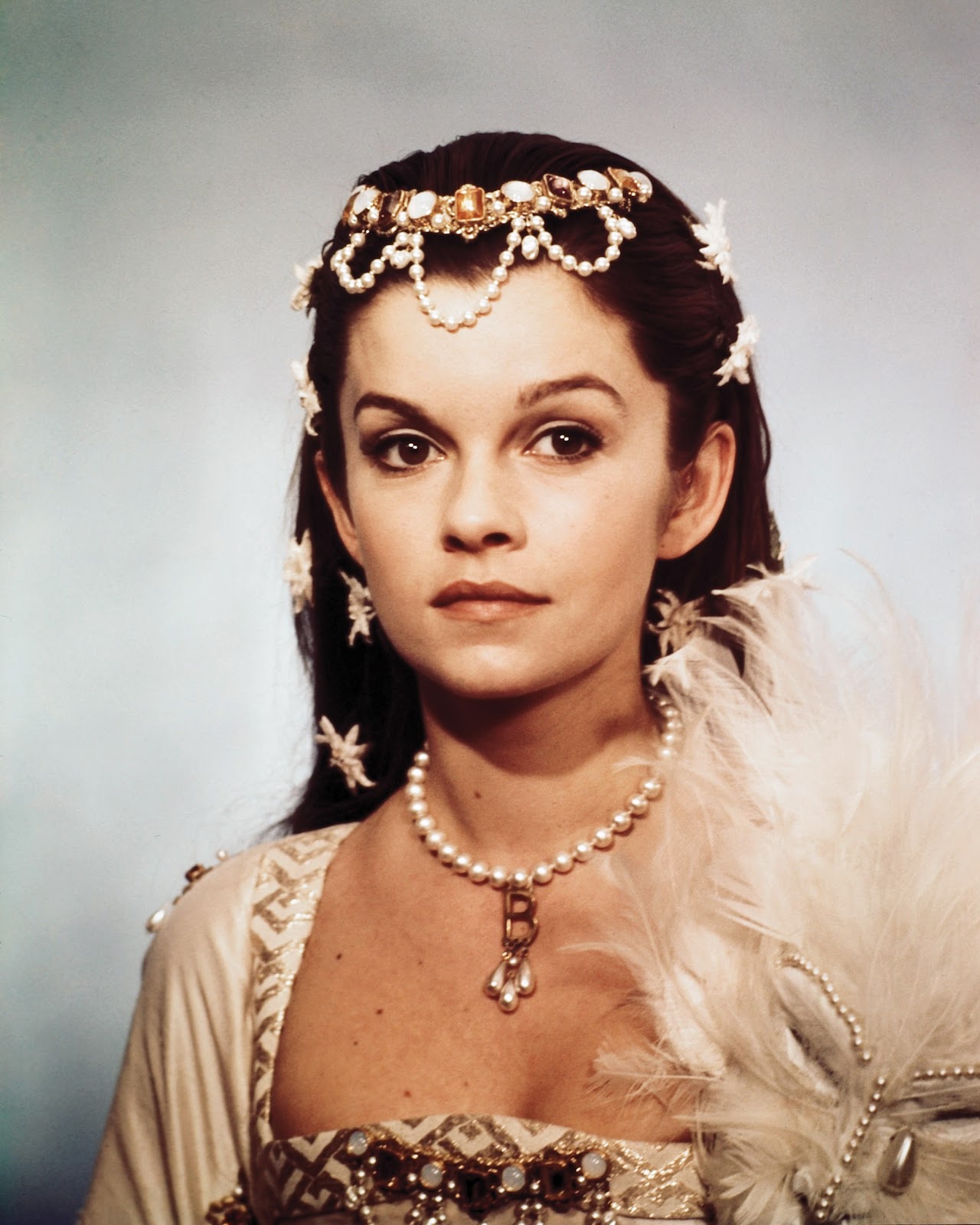
Based on the 1948 Maxwell Anderson play of the same name, I find Anne of the Thousand Days an overrated slog of a movie, whose beautiful visuals and strong performances from Genevieve Bujold and some supporting actors can’t elevate it into a good or gripping film. Needless to say, I know this is a controversial take. It’s also a shame, as I enjoy Bujold’s performance! In fact, it blows Richard Burton’s turgid and bored turn as Henry out of the water.
Bujold compellingly portrays Anne’s development from a lovestruck teenager to a devoted mother and ruthless political player, as you can see her grow and harden throughout the movie. When Bujold declares, “I’d sign 10,000 [death warrants] rather than disinherit my blood!”, you can feel both Anne’s post-marriage nerves and fierce determination to protect Elizabeth. She also captures Anne’s boldness and vivacity of spirit well, although sometimes to the point of straining credulity. Would the real Anne have maintained Henry’s love if she continually insulted and taunted him at the start of his pursuit of her? Still, Bujold also manages to convey, sometimes with impressively few words or even silence, how captivating Anne must have been. Yet she’s equally adept at depicting Anne’s more somber moments in the Tower, from her “one thousand days” monologue in her cell to her wide, frightened eyes at her execution. I even like, on a dramatic level, her ending monologue where she foretells Elizabeth’s future greatness, even if the real Anne had no way of knowing this.
Unfortunately, there are problems. Aside from flagrant inaccuracies that often rip up the history books (the entire trial scene among them), Anne wounds Henry during their final (ahistorical) confrontation in the Tower by lying that she’s guilty of serial adultery. The fact that Bujold is never shown swearing her innocence on the Eucharist and peril of her soul’s damnation, as in real life, makes the movie’s Anne into someone willing to discard her entire reputation just to score a point in an argument. Above all, the movie fails to create a compelling or believable relationship between Anne and Henry, whose love is more reminiscent of sexual harassment than anything. Anne later claims in the Tower that their love for each other only overlapped on the day they slept together. This is a far too reductive characterization of the real Henry and Anne’s complex, if ultimately toxic relationship. Just because it became abusive and ended in tragedy doesn’t mean that they didn’t love each other for most of it. While Anne of the Thousand Days gets much of Anne’s personality at least somewhat right, it falls apart in the broader depiction of her life. The fact that Bujold’s performance highlights Anne’s charming side, displays her temper without making her unrelentingly unpleasant, and allows the viewer to grasp why Henry fell for her, raises this portrayal above Wolf Hall. But it’s not enough to raise it into my top three depictions.
#3: Jodie Turner-Smith in Anne Boleyn (2021)
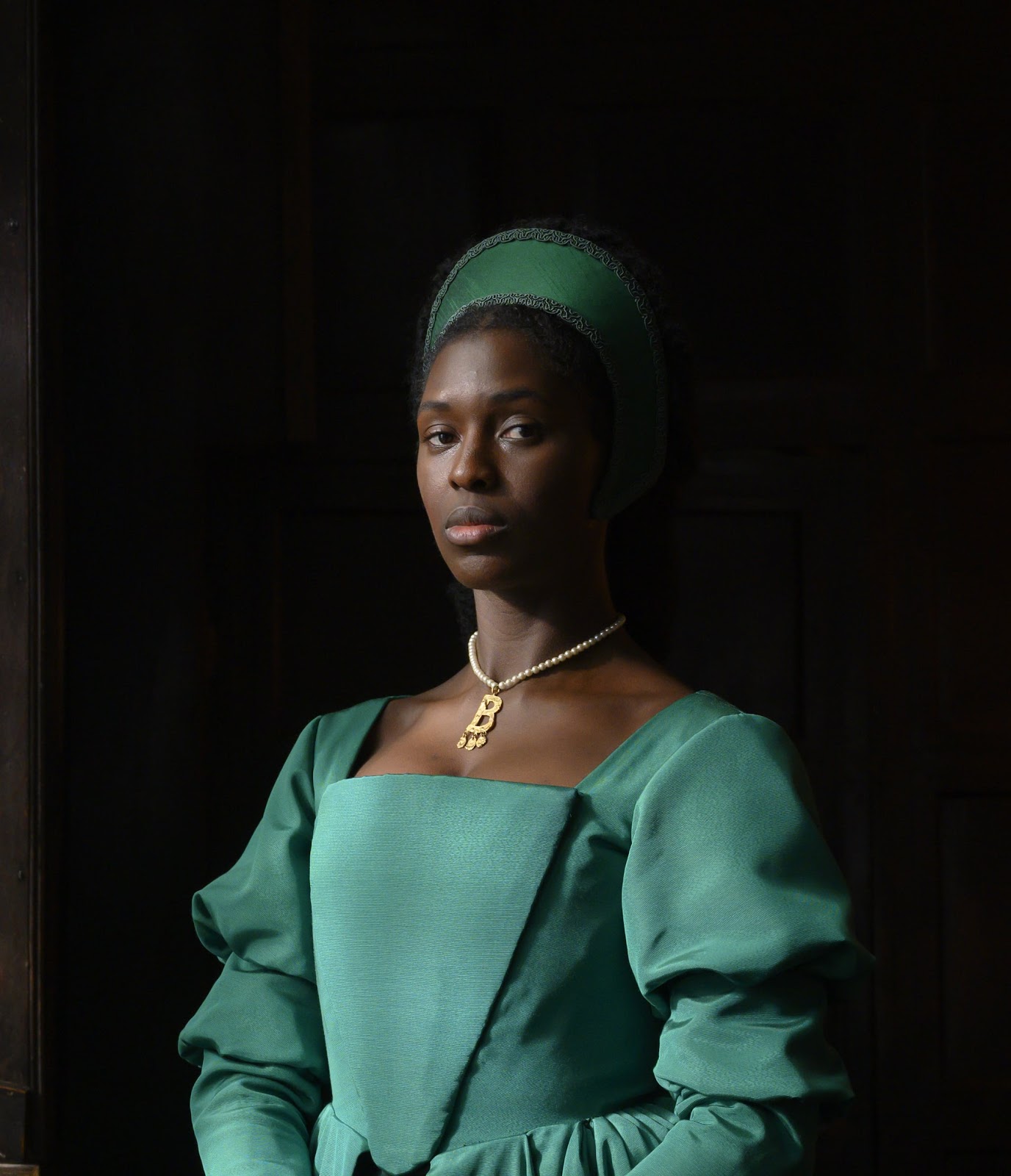
When Jodie Turner-Smith’s casting as Anne in Channel Five’s 2021 three-part television drama Anne Boleyn was announced, a firestorm of controversy erupted around casting a Black woman as Anne, who was in real life white. The show was review bombed to hell and back, as Turner-Smith was subject to torrents of ignorant, racist abuse and hate. While I should make a blog post about Anne Boleyn (2021) one day, I want to say this: I don’t care that Turner-Smith is Black when the real Anne wasn’t. Unless race is an essential part of the character (i.e. a movie about MLK or Queen Nzinga of Ndongo, etc), an actor’s physical resemblance to the historical figure they portray is distinctly secondary when compared to their acting ability and the script they’ve been given. Indeed, for all the vitriol hurled her way, Turner-Smith’s performance as Anne is breathtaking and frankly the best part of the show.
As with her historical counterpart, Turner-Smith’s Anne is devoted to religious reform and eager to see the funds from dissolved monastic houses allocated to schools and charitable projects. Her faith was such an important part of her life and character, and I’m glad Anne Boleyn (2021) captured that. Despite the show only beginning after Catherine of Aragon’s death in early January 1536 and thus centering on Anne’s fall, Turner-Smith’s Anne is utterly captivating. We can see, even as her marriage collapses around her, the effortless charm and charisma that made Henry want her as his queen and break with Rome to marry her. Her fierce intelligence, hot temper, cool political maneuvering, love for Elizabeth, and the passionate feelings she and Henry still have for each other are all brilliantly captured. I especially loved the royal gravitas, often shading into hauteur, that Turner-Smith brought to her depiction. If not born to be queen, Turner-Smith’s Anne is every inch one. But unlike Foy’s Anne in Wolf Hall, who’s also a savvy if arrogant politician, Turner-Smith’s portrayal has its more sympathetic and nuanced sides. More and more notes of fear and desperation slip into this version of Anne’s every word and glance as she sees Henry gravitating towards Jane Seymour and fights back. Her miscarriage and the mental trauma she suffers from it are unflinchingly and devastatingly portrayed. And at her trial and death, Turner-Smith’s Anne, while understandably sad-eyed, is dignified and composed through the end.
However, by focusing on her fall, Anne Boleyn (2021) misses the chance to give a richer, more complex depiction of the historical Anne. We’re only given the last five months of her life, which are quite unrepresentative of most of her life. This is a shame, as Turner-Smith more than has the acting chops to helm an entire eight-episode series about Anne. Still, compared to everything else, this is a relatively minor drawback. The way the script superbly captures the historical Anne’s essence and character (even if it sometimes fudges the facts and dates to a significant degree), as well as Turner-Smith’s spellbinding performance, combine to make this my third favorite portrayal of Anne.
#2: Dorothy Tutin in The Six Wives of Henry VIII (1970)
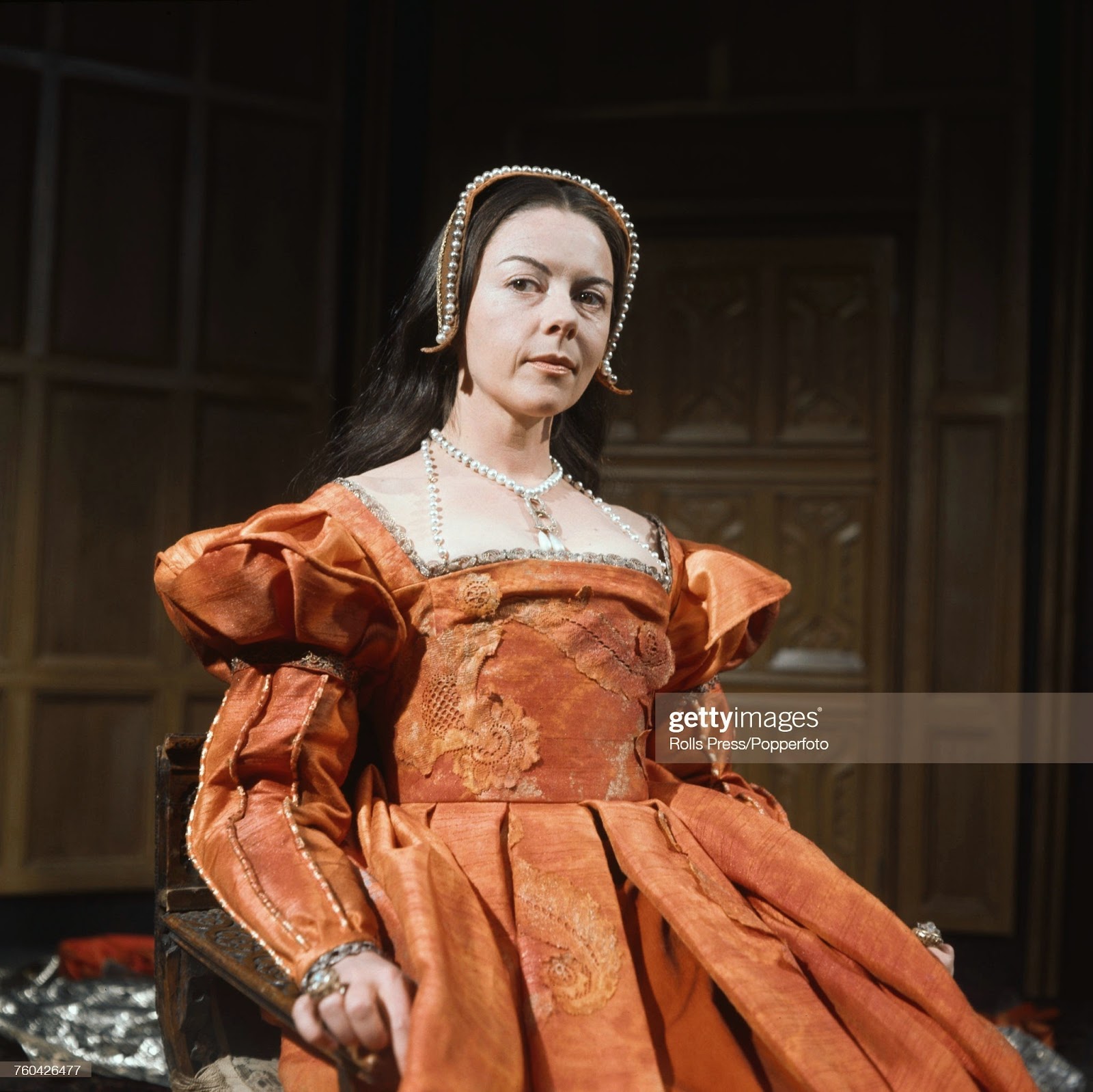
Tutin’s performance was the first on-screen depiction of Anne I ever saw. But even accounting for personal bias, Tutin’s performance is a triumphant tour de force. This is all the more remarkable given that save for about five minutes in the first episode, about Catherine of Aragon, Tutin only had the ninety minutes of the second episode, centered on Anne, to make her mark. Yet in those ninety minutes, Tutin puts nearly every other depiction of Anne to shame, as sparks fly between her and my favorite actor to ever portray Henry, Keith Michell. It’s a travesty that her performance isn’t more widely known and lauded. Still, it wasn’t true at the time – she got nominated for Best Actress at the 1971 BAFTA TV Awards. Why, then, was she so acclaimed? Let’s find out.
Anne’s first appearance is quite unsympathetic. When told Catherine embroiders Henry’s shirts, she scoffs, “That’s all she’s good for”, and she bursts into scornful laughter when she hears that Henry does visit Catherine’s bed-chamber, but only to hear vespers with her. However, every episode of the miniseries, one for each wife, was written by a different playwright. Thus, it’s natural that Anne wouldn’t be portrayed very kindly in Catherine’s episode. In the second episode, however, Tutin shines. Her Anne is as intelligent as she is fiery and brave, tearing apart Cromwell’s farrago of lies at her trial as passionately as she confronts Henry over his affairs. Charm seeps from her fingertips, even when dining with her jailor William Kingston. It would’ve been very easy to play Anne as a cruel, nasty shrew. However, both the script and Tutin stress the undercurrent of fear running through Anne from the episode’s start in September 1535, helping viewers empathize with her. The day she miscarries, she confides in Cranmer about how she feels increasingly isolated and tearfully tells him of her desperate hopes that her son can revive Henry’s love.
But throughout her fall, Tutin’s Anne always retains a truly regal dignity. She courageously defends herself at her trial, giving a speech decrying its utter injustice and reminding everyone of “that court which shall judge us all in time.” When she declares, “And I am innocent. That is sure. And I am a victim. That too is sure … I am the Queen and entitled to better than you have given me!”, her unflinching delivery and commanding gaze leave the viewer in no doubt about the truth of her words. Her famous quote about her “little neck” is said in a resigned, almost regretful manner, and she dies with great composure and an achingly human world-weariness. Against such a performance, the fact Tutin was 39 when the episode was filmed (to Anne’s 29-35 at her death), the series’ low budget, and that we only get to see the tail end of Anne’s marriage fade into the background. Ultimately, though, even Tutin’s Anne must give way to the greatest on-screen Anne depiction of them all.
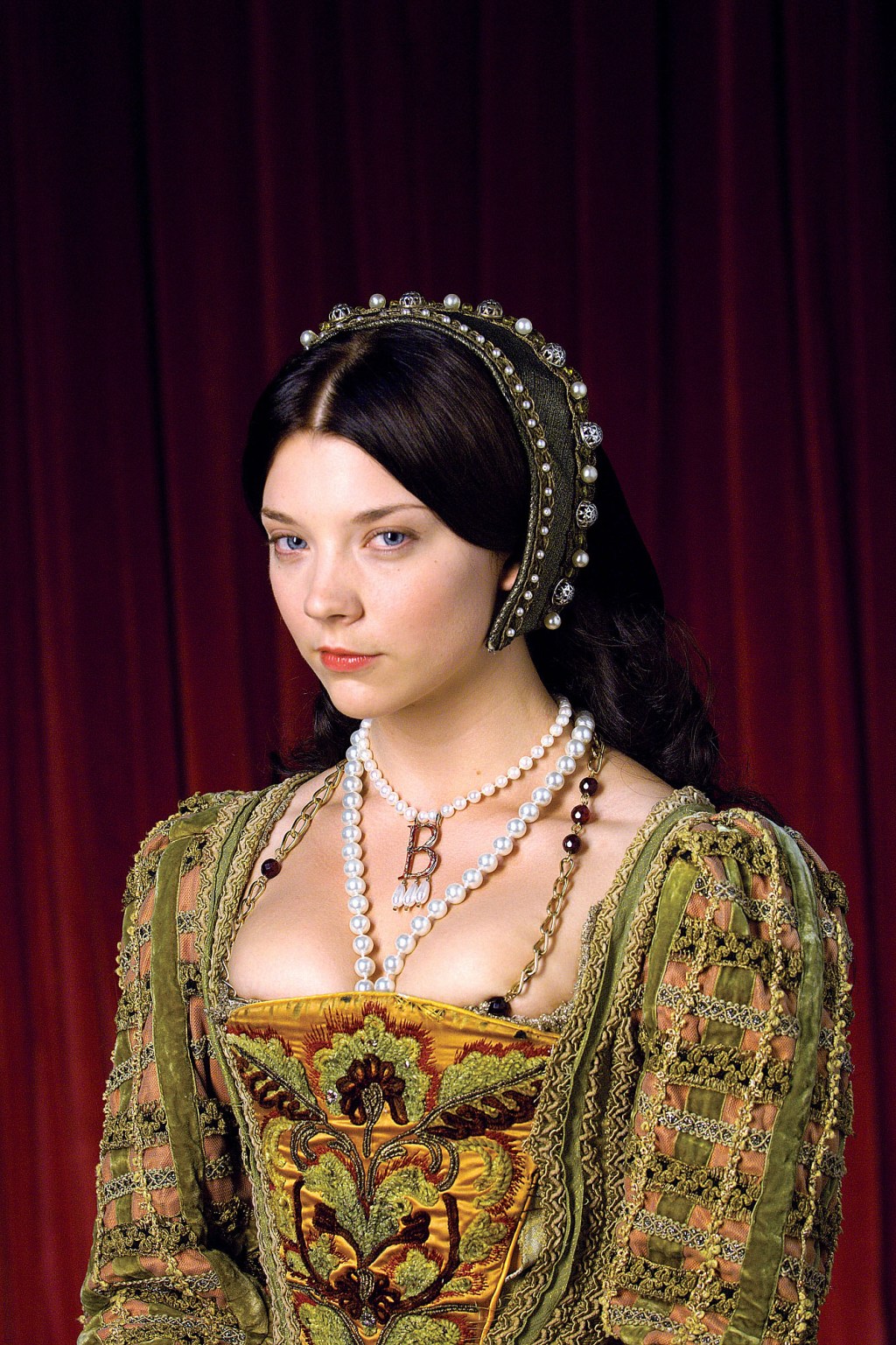
#1: Natalie Dormer in The Tudors (2007-2010)
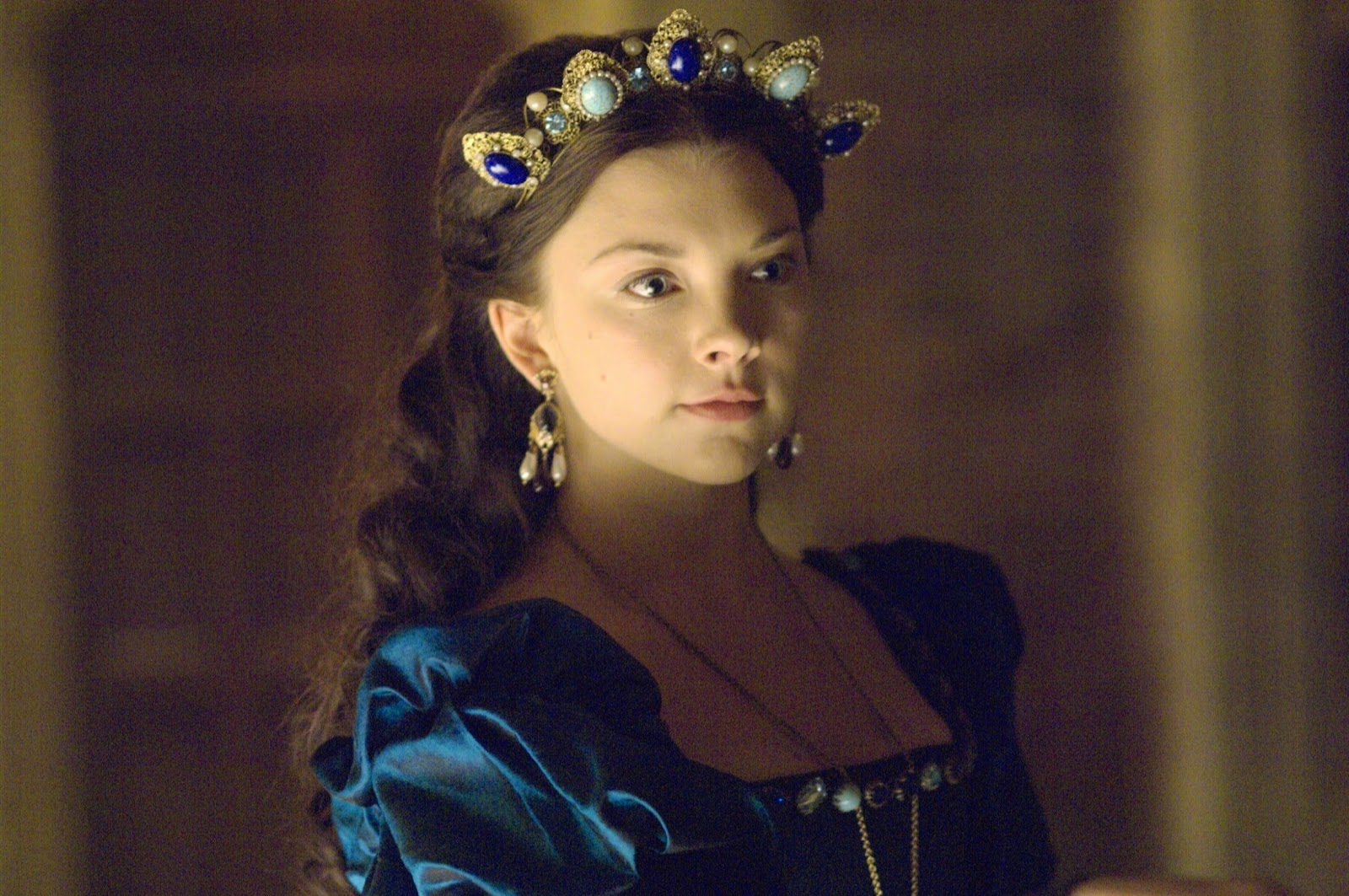
With twenty episodes and two hours and thirty-seven minutes of screen time across them (not even mentioning her ghostly scene in the series finale), Natalie Dormer had by far the most time as an actor to flesh out her depiction of Anne. It would take either consistently horrible acting or consistently wrong vibes for the character for an actor given so much on-screen time to not deliver a good performance. However, Dormer surpasses a merely good portrayal to capture every facet of the historical Anne’s character and trace her emotional growth in more detail than any other depiction. Given that The Tudors gets an unfairly bad rap due to people focusing on the 40% of it which is bad and/or unhinged, it’s time to look past this and appreciate her portrayal.
While more sketchily characterized than in Season Two, Dormer does the most she can with her limited material in Season One. She perfectly captures the historical Anne’s sprezzatura (to use a Renaissance term) and allure. Even without speaking, Dormer stands out from the other ladies-in-waiting. Her maneuvering against Wolsey and sympathy for religious reform are also depicted, albeit briefly. However, her portrayal in Season One suffers from a great deal of unnecessary sexualization, as in the scene where Dormer’s Anne puts a ribbon with her motto “Ainsi sera, groigne qui groigne”, up her skirt for Henry to find. Had The Tudors been canceled after Season One, Dormer’s Anne would probably rank at #7 on this list. Thankfully, though, it got renewed.
Dormer truly comes into her own in Season Two. She had already done significant research into the real Anne and already successfully persuaded the showrunner Michael Hirst to let her portray her as a brunette rather than her natural blonde hair. It was no surprise, then, that she also begged him to write Anne with more depth in the second season and stress both her political skills and deep evangelical faith. Hirst obliged, and Dormer’s performance was finally allowed to fully blossom. We get to see her Anne instructing her ladies in godliness and urging them to read Tyndale’s Bible, feuding with Cromwell over how best to use dissolved monastic funds, and frantic, unsuccessful politicking to secure a French match for Elizabeth. But Dormer never loses sight of Anne’s inner life. She vividly portrays the real queen’s love for her daughter, grief at her pregnancy losses, increasing paranoia, fear of her stepdaughter Mary, flirtations, and fury at Henry’s infidelities. By turns unsympathetic and heartrendingly human, it would take a heart of stone to not be moved by her courage at her execution. She appears for a final time in the series finale as a ghost, giving Henry an enigmatic half-smile as she turns towards Elizabeth and leaves him begging her to stay. Dormer’s portrayal is a beautiful tribute to the historical Anne and does her real justice in unparalleled detail, giving her the number one spot on this ranking.
And there we have it! It’s been a blast ranking these figures, and I can’t wait to share more of my thoughts with you. Next stop: the story of my time at Oxford!
 Adventures in Early Modernity
Leave a comment